
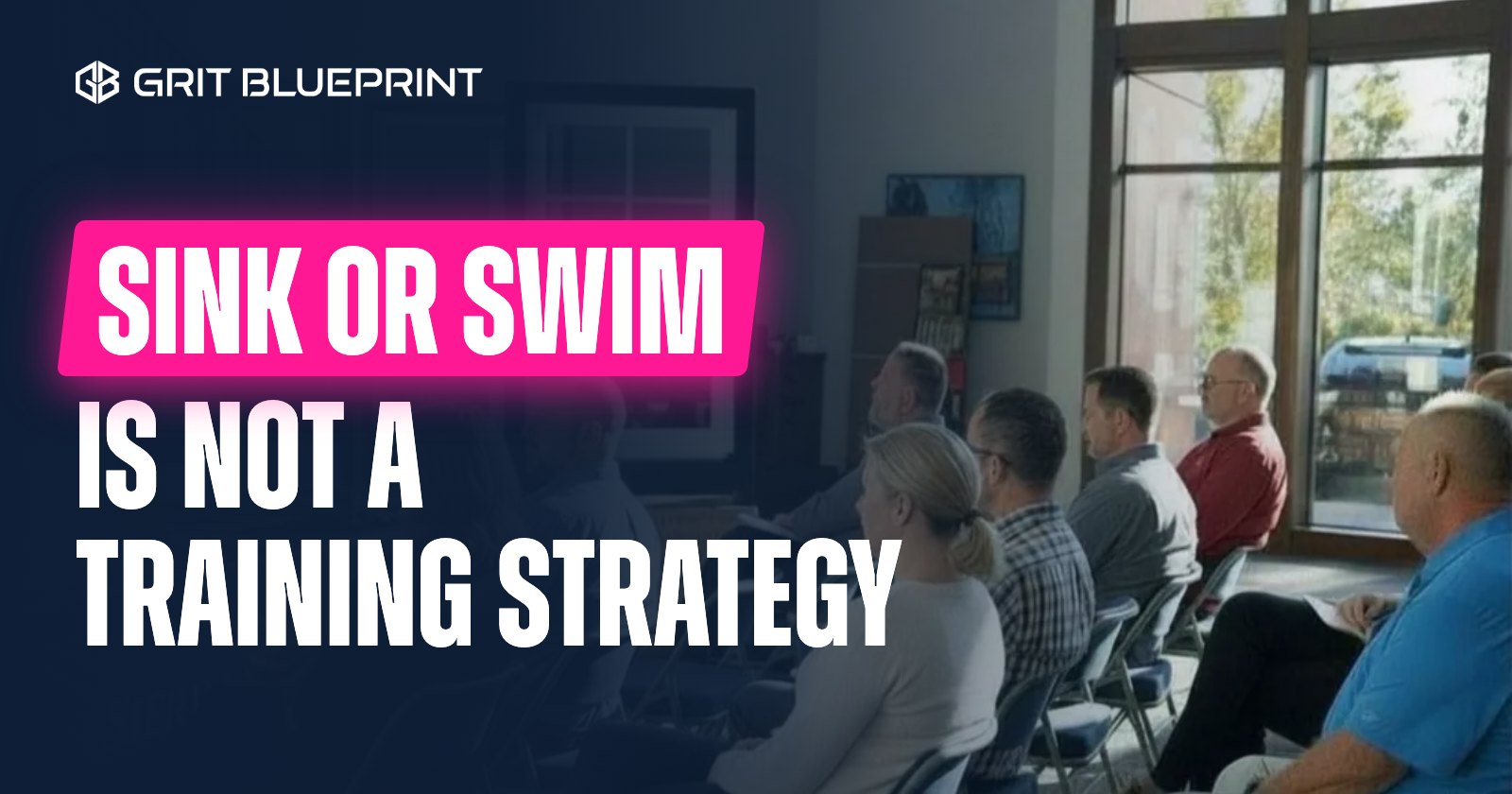
Sitting a new hire next to Joe for a week and hoping it sticks is gambling with your future. Millennials and Gen Z want to learn and grow at work. Building industry companies need real training that teaches the products and the people skills.
I’ve been in this industry for decades now. Most companies have no training at all. It’s more like “sit with Joe or Susan for a week and take in how they do things. Good luck.” In other words, you’re in the deep end and I really hope you are a great swimmer. The time has come to change that.
The Generational Wake-Up Call
The workforce has changed, and younger workers expect to grow on the job. That means your figure-it-out training approach is driving away the future of your industry.
What Happens When a New Hire Has No Product Training?
Picture this. Your newest employee just got their first angry call. A contractor who’s waited 15 weeks for a $25,000 custom door package is on the line, furious because the door doesn’t fit right.
Your rookie has zero training in handling conflict. They barely know how the product installs. They have no clue about the warranty process.
What happens next? Best case, they panic and transfer the call to a veteran who’s already swamped. Worst case, they make promises they can’t keep and turn a fixable issue into a customer service nightmare.
Think about your product lineup:
- Multi-panel folding door systems with complex hardware configurations.
- High-performance windows with specific installation requirements.
- Engineered wood packages that require precise sizing and design knowledge.
- Custom millwork with tight tolerances and specific applications.
Now think about how you’re training people to sell and support these products:
- “Here’s the catalog”
- “Watch how Joe quotes it”
- “The specs are… somewhere in this binder”
- “Just transfer angry customers to me”
The Essential Skills Gap
Technical knowledge is only half of it. Your team needs:
- Conflict resolution skills for those jobsite issues that always come up.
- Training in how to explain complex specs.
- Project management skills for custom orders.
- Problem-solving skills for installation challenges.
- Confidence in handling warranty claims.
Instead, they’re getting:
- Sink or swim customer service.
- Trial by fire sales training.
- Learn-from-your-mistakes warranty handling.
- Random product knowledge.
The Hidden Cost of Training Roulette
Here’s a scenario that should keep you up at night. You have three people doing the same job. Sarah closes 40% more sales than Mike and Tom combined.
Her customers rave about her. Her quotes get accepted faster. Her projects run smoother.
Nobody knows exactly what Sarah does differently. When a new hire starts, it’s a coin flip whether they’ll shadow Sarah, Mike, or Tom. You’re gambling with your company’s future based on who happens to be free that week.
And when Sarah gets recruited by your competitor, as she will? All her best practices, her efficient systems, and her ways of pleasing customers walk out the door with her.
Your Old-School Training Is Killing Your Future
While you’re still betting on shadow Joe for a week, your younger workers are watching YouTube tutorials on their lunch break. They are trying hard to fill the knowledge gaps you’re leaving open.
The modern workforce wants:
- Clear development paths.
- Structured learning opportunities.
- Regular feedback and coaching.
- Technology-enabled training.
- Documented best practices.
Instead, you’re offering:
- Figure it out as you go.
- Random knowledge transfer.
- Inconsistent methods.
- Outdated systems.
- Lost best practices.
Your younger workers want growth as much as a paycheck.
How Do You Build a Better Training Strategy?
For those ready to stop the madness, here is the path forward.
Build Real Training Systems
Yes, keep the mentor relationships, but as support for your training strategy instead of the whole thing. Create full programs that turn new hires into confident product experts.
Embrace Structure
Stop relying on knowledge nobody wrote down and on random mentoring. Put training systems in place that actually work.
Kill the Sink-or-Swim Culture
Turn “figure it out” into “here’s how to succeed with builders.”
Create Learning Paths
Turn random knowledge transfer into structured development programs.
Make Training Your Edge
Replace chaos with confidence by building skills step by step.
The Brutal Truth
The gap between companies that invest in structured training and those that don’t is now about survival. Complex products demand full training. Angry customers require skilled handling.
Your future workforce won’t put up with figure-it-out training for either one. Meanwhile, you’re one angry call away from losing your rookie and a good contractor too.
TLDR (Too Long, Didn’t Read)
- Shadow Joe for a week is gambling with your future, and it does not count as training.
- Your $25,000 custom door package just exploded into a warranty nightmare.
- Complex products require real training instead of handed-down knowledge.
- Time to evolve or watch your talent pipeline dry up.
GRIT Tip
Ask your team today: “What’s the hardest customer situation you’ve faced, and how did you handle it?” Their stories will write your conflict resolution training manual.
Ready to build a training system that covers both technical expertise and people skills? Let’s talk about bringing your approach up to date before you lose another custom order or another good employee.

Grit Blueprint is designing training for building materials companies to fix this problem for the next generation. If you’re interested in learning more, book a call with us to talk about how it could work for you.
For more on helping new hires through their first months, read how better training helps with the labor shortage.
Questions and Answers
Most companies have no real training, just “sit with Joe or Susan for a week.” New hires end up handling complex products and angry customers with no preparation. Younger workers want to learn and grow at work, and figure-it-out training drives them away.
Best case, they panic and pass the call to a veteran who is already swamped. Worst case, they make promises they can’t keep and turn a fixable issue into a customer service nightmare. Either way, you risk losing the new hire and a good contractor at the same time.
Product knowledge is only half of it. Teams also need conflict resolution for jobsite issues, communication skills for explaining complex specifications, project management for custom orders, problem-solving for installation challenges, and confidence in handling warranty claims.
If nobody knows exactly what your best salesperson does differently, every new hire is a coin flip based on who is free that week. When that person gets recruited by a competitor, their best practices, systems, and ways of pleasing customers walk out the door with them.
Keep your mentors, but use them to back up a real training plan. Write down what your best people know, build learning paths, and teach skills step by step. A simple first step is to ask your team about the hardest customer situation they have faced and how they handled it.
Want Help Putting It to Work?
A free call with Stefanie Couch. About 30 minutes.
Not ready to talk? Get the Built to Win Newsletter

Written by Stefanie Couch
Founder of Grit Blueprint and the front-facing voice of the brand. Stefanie helps companies across the building industry turn hard-earned trust into visible proof, useful content, and AI-search-ready authority. Known on stage, on the mic, and for her signature pink hat.