
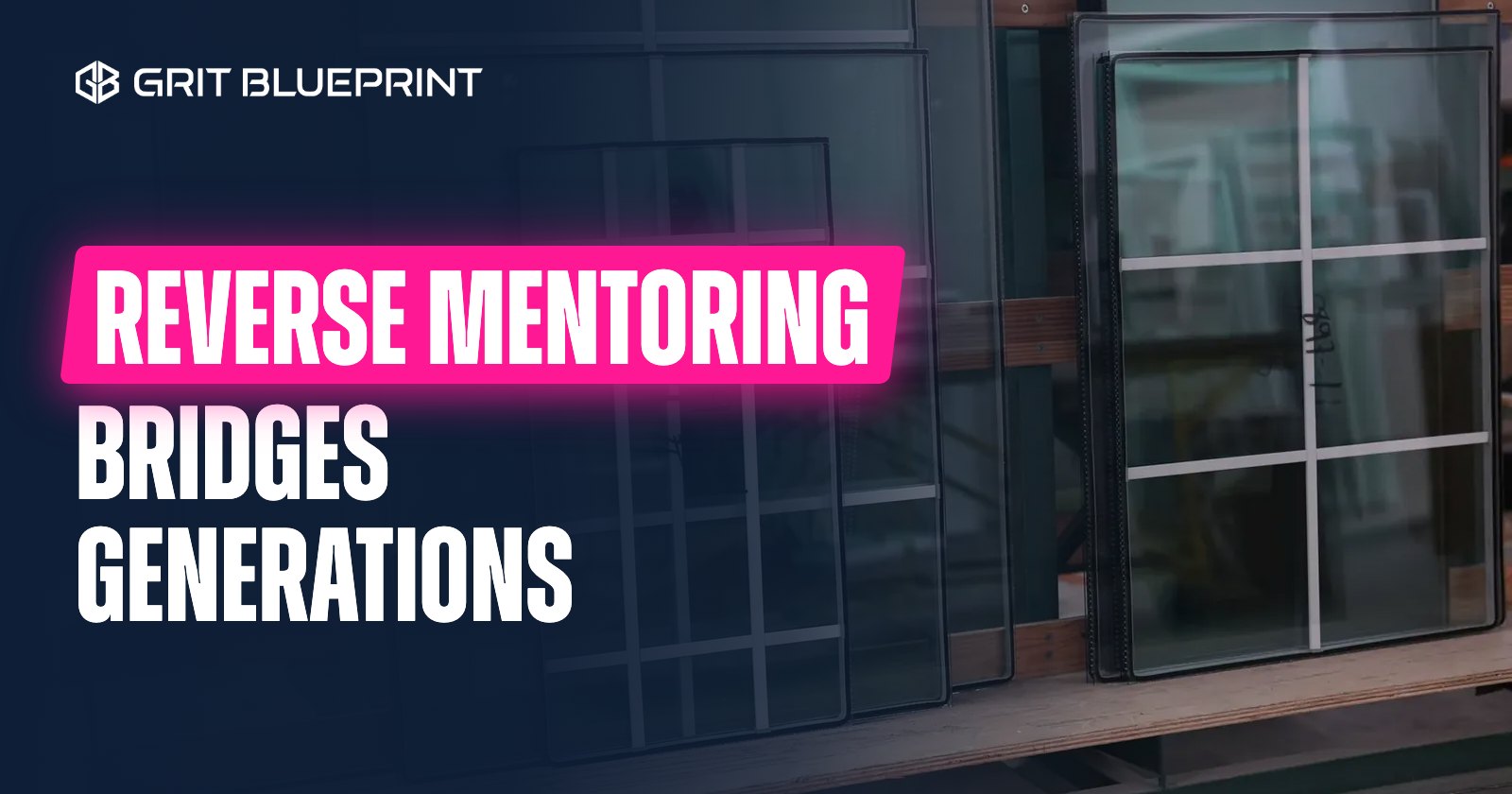
Reverse mentoring is when younger workers mentor their older coworkers. It helps a team of mixed ages learn from each other, respect each other, and work better together. To start, set clear goals, pick the right mentors, and train them.
Most teams today mix ages. Seasoned Baby Boomers, tech-savvy millennials, and the newest leaders from Generation Z each bring their own skills and experience to the table. Reverse mentoring is one way to bridge the gap between them.
I’m a millennial woman. I have worked in the construction industry, and I now run two companies in the industry. I’ve seen firsthand how reverse mentoring can make a workplace more welcoming and understanding.
Here is what it is, why it helps, and three steps to bring it into your company.
What Is Reverse Mentoring?
Reverse mentoring is when younger employees mentor their older colleagues. It flips the usual model, where the older worker with more years on the job mentors the younger one.
Jack Welch, the former CEO of General Electric, first made the idea popular. He saw that younger workers could teach their older coworkers about technology. That is how reverse mentoring was born.
Why Reverse Mentoring?
Reverse mentoring teaches older workers the latest technology, and it builds respect and understanding on both sides. Both people learn, which breaks down stereotypes about age and makes everyone feel more welcome.
In construction and building materials, labor and training are always hot topics. Reverse mentoring can help bridge the gap between the old and new ways of doing things.
Younger workers can share what they know about the latest construction technologies. Older workers can share what they’ve learned over the years.
Benefits of Reverse Mentoring
It Keeps Your Team Learning
Reverse mentoring builds a culture where people never stop learning. I have seen the wide benefits of a “spirit of curiosity” in my life and career.
It pushes people to stay curious and open-minded, with a growth mindset. That can lead to more work done and more new ideas.
It Breaks Down Stereotypes
We all tend to think more highly of our own generation and the way we like to work. Reverse mentoring helps break down those stereotypes.
Both people get to see each other as people, instead of as members of an age group. That can lead to better talks, better teamwork, and a stronger work culture.
It Builds Stronger Relationships
Reverse mentoring also builds stronger bonds between coworkers. When they spend time together and learn from each other, they understand and value each other more. That can lead to better teamwork and a stronger sense of community.
In construction, where teamwork is crucial, this can help a lot. It can build a closer team, which leads to better project outcomes, safer job sites, and higher profits.
How to Start Reverse Mentoring in Your Company
You might be wondering how to put this into practice. Here are three steps.
- Identify the goals. Decide first what you want to achieve. You might want people to get better with technology. You might want a more welcoming workplace. Clear goals let you shape the program to meet them.
- Select the right mentors. A reverse mentoring program depends most on its mentors. Choose mentors who know their stuff and are also patient and kind. They should be willing to share what they know and to learn from the people they mentor.
- Provide training. Younger workers may be good with tech, but they may not know how to mentor yet. Train them. Teach them how to talk clearly, how to give helpful feedback, and how to handle hard talks.
If you want help training your team, we also run workshops and training for building industry companies.
Give It a Try
Reverse mentoring is a strong tool for bridging the age gap at work. It builds respect on both sides and keeps people learning. That makes a workplace more welcoming and gets more done.
So why not give it a try in your company? You might be surprised at the good it does.
When this article was first published, I was getting ready for GlassBuild in Dallas, September 30th to October 2nd. I was there for the National Glass Association as their partner and brand ambassador. GlassBuild is a great place to meet industry leaders and share ideas. You can find event details at https://www.glassbuildamerica.com/registration (opens in a new tab).
Help With Your Company and Personal Brand
Knowing how to grow your team and your brand is the first step. Grit Blueprint focuses on the building materials industry. We build marketing around your brand and your goals, from brand work to SEO. That helps your company stand out and draw top talent.
Grit Blueprint also helps with personal brands. That includes coaching on public speaking and on building a speaking business. It can help if you want to present better, grow a speaking career, or share your personal brand more clearly.
Book a strategy call with Grit Blueprint to talk about your company and your personal brand.
Questions and Answers
Reverse mentoring is when younger employees mentor their older colleagues. It flips the usual model, where the older, more experienced employee mentors the younger one. Jack Welch, the former CEO of General Electric, first made the idea popular when he saw that younger employees could teach older coworkers about technology.
In construction and building materials, labor and training are always hot topics. Reverse mentoring bridges the old and new ways of doing things. Younger employees share what they know about the latest construction technologies, and older employees share the experience and insights they’ve gained over the years.
It builds a culture of continuous learning, breaks down generational stereotypes, and builds stronger relationships between employees. Those can lead to better communication and teamwork. In construction, where teamwork is crucial, a closer team can mean better project outcomes, safer job sites, and higher profits.
Start by setting clear goals, such as improving skills with technology or building a more inclusive workplace. Then pick mentors who know their stuff and are patient and understanding. Finally, train the younger mentors in clear communication, helpful feedback, and handling hard conversations.
Yes. Younger employees may be tech-savvy, but they may not have the skills to be good mentors yet. Train them on how to communicate clearly, how to give helpful feedback, and how to handle hard conversations. Good mentors are also willing to learn from the people they mentor.
Want Help Putting It to Work?
A free call with Stefanie Couch. About 30 minutes.
Not ready to talk? Get the Built to Win Newsletter

Written by Stefanie Couch
Founder of Grit Blueprint and the front-facing voice of the brand. Stefanie helps companies across the building industry turn hard-earned trust into visible proof, useful content, and AI-search-ready authority. Known on stage, on the mic, and for her signature pink hat.