A free call with Stefanie Couch. About 30 minutes.
ExampleOne task
Prompt: Turn a recorded explanation into a guide new people can use.
Give it enough to work with
Check what it gives back
Decide what still needs a person
A Grit Blueprint training session.
Paradigm
“They do not just do things for you, they teach you at every step.”
John Wheeler, Paradigm
What Is AI Training?
AI training teaches your team to use AI on the work they already do, like meeting notes, customer follow up, and writing.
Why it matters
AI feels simple when it starts with work your team knows. People practice on their own jobs and learn how to check what AI gives back.
The problem it solves
Everyone says use AI, and nobody on your team knows how. Your salespeople spend more time on notes and follow up than with customers. When your veterans retire, what they know goes with them.
What you get
Grit Blueprint runs it for building industry teams. People practice on one real task from their own job. Your leaders agree on one place to start.
Not every company comes to us in the same spot. Which one sounds like you?
What we hearWhat changes
You might say: “Everyone says use AI. Nobody on our team knows how.”
AI feels simple, because it starts with work your team knows.
We teach it in plain words, with work your team knows, like meeting notes and customer messages.
“When Stefanie spoke on the scale at which you could use AI, it was ridiculously helpful.”
Josh McCloskey, Commercial Sales Manager, Standard Bent Glass
You might say: “When our veterans retire, what they know goes with them.”
What your veterans know gets written down for the next hire.
We show your team how AI can turn a recorded explanation into a guide new people can use.
You might say: “We’re scared to waste money on the wrong AI thing.”
Everyone agrees on one place to start.
We help your leaders pick one task, test it on real work, and check the result before adding more.
“Stefanie touched on key points regarding the growth and development of AI in the lumber industry, a subject that will be a major focus for our team moving forward.”
Kyle Kaufmann, Sales Business Development, KP Logix
You might say: “Our salespeople spend more time on notes and follow up than with customers.”
Notes and follow up start with a draft your team can check.
People practice on jobs like getting ready for a customer meeting and writing the follow up after it.
What a Session Looks Like.
You pick the task. We choose the materials for that session. A sales team might get ready for a customer talk and plan the follow up.
Before the Session
You pick one task
Choose one job your team already does, like a customer follow up or meeting notes.
You bring real examples
Bring examples people are allowed to use, plus someone who can check product details.
In the Room
Your team practices
People try AI on that task. They learn to give it enough to work with, check what it gives back, and decide what still needs a person.
After
You keep it going
Your team leaves with a task they can keep using. The manager has something clear to follow up on.
Where We Have Taught AI.
Talks and team sessions where we teach building industry people to use AI.
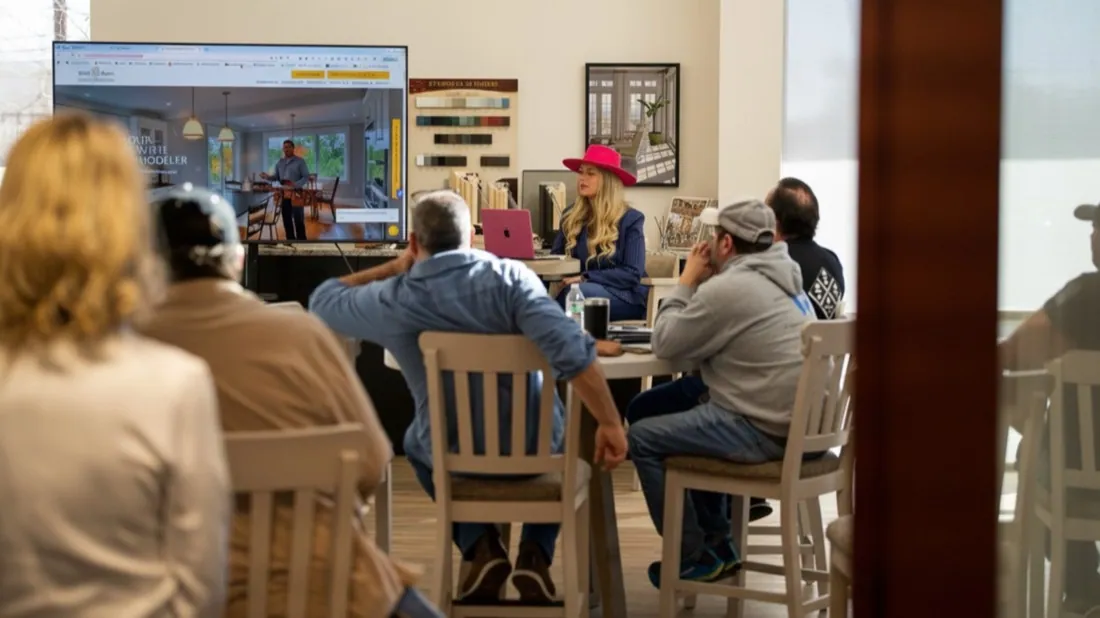
Team SessionPeople work on a task they already do, with Stefanie at the front of the room.
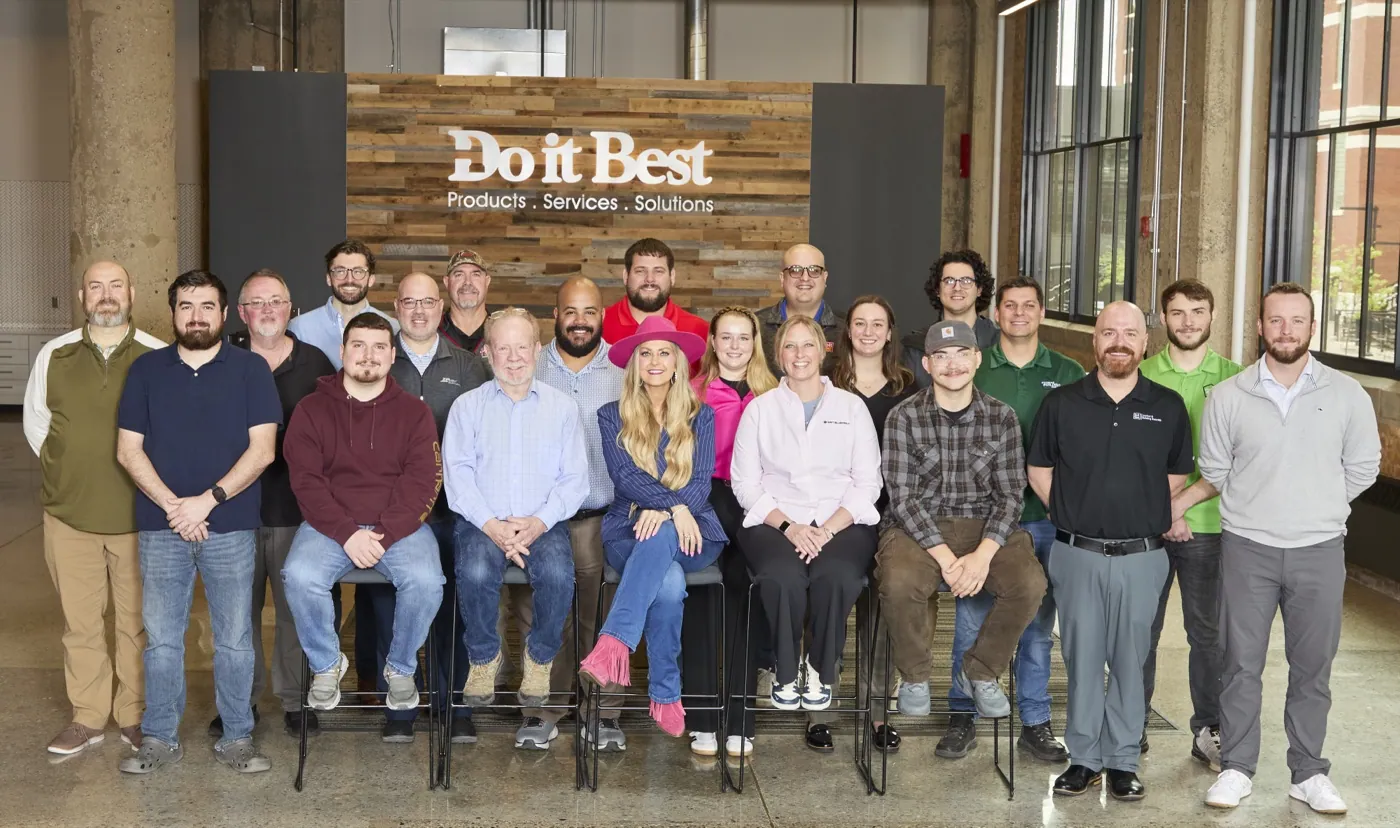
Explore Team Training→Do it Best LBMOur work with Do it Best LBM began with millwork training. It has grown to include AI.
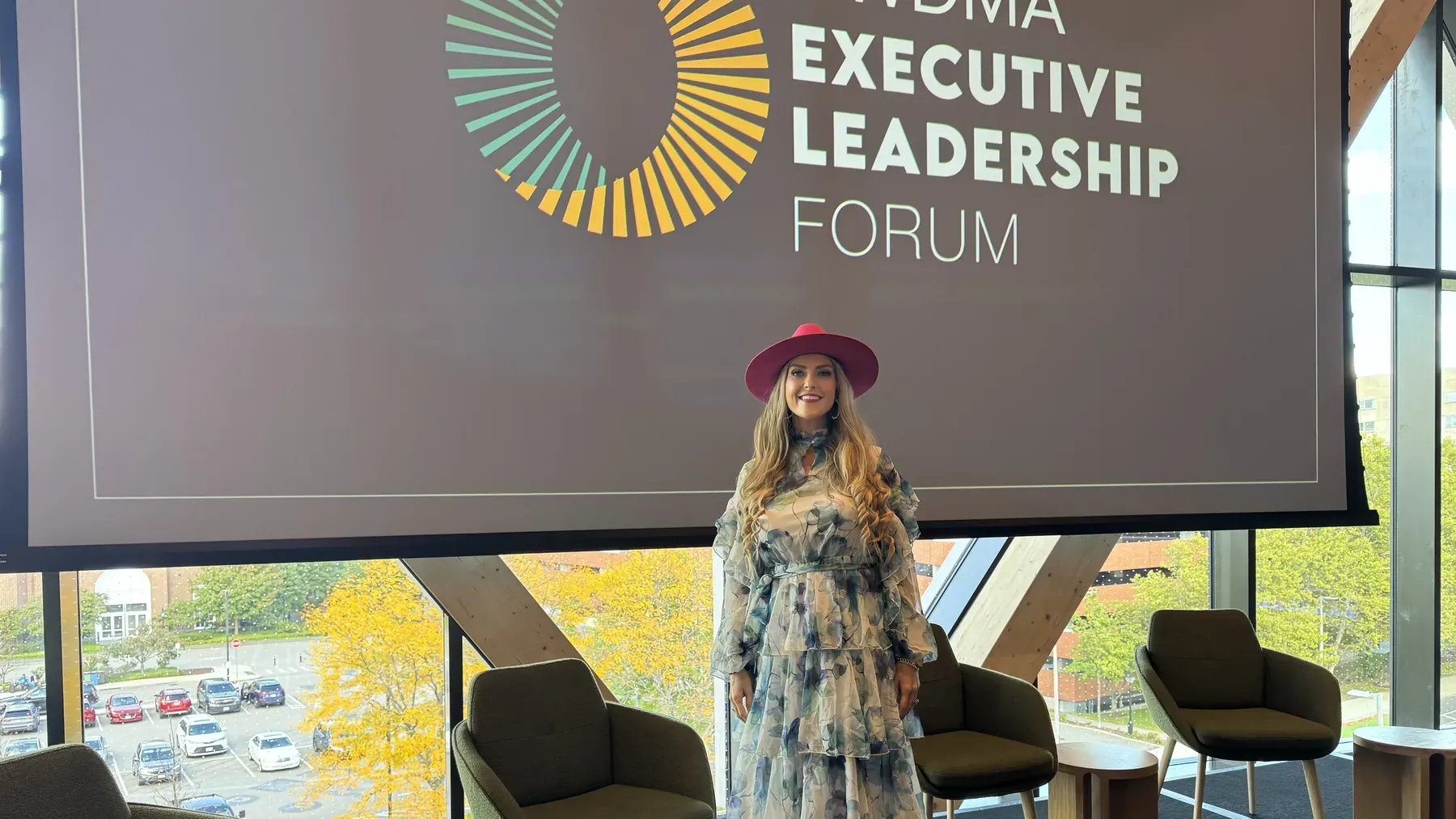
See the Do it Best LBM Story→WDMA ForumStefanie gave window and door CEOs an AI session in 2025. In 2026 she helped lead the working sessions at their leadership forum.
See the WDMA Story→World Millwork Alliance
Her luncheon keynote showed millwork teams how AI can help after a missed call, with meeting notes, and with writing down a process.
See the World Millwork Alliance Story→
Watch Stefanie teach AI. Moments from her AI talks, in one short video.
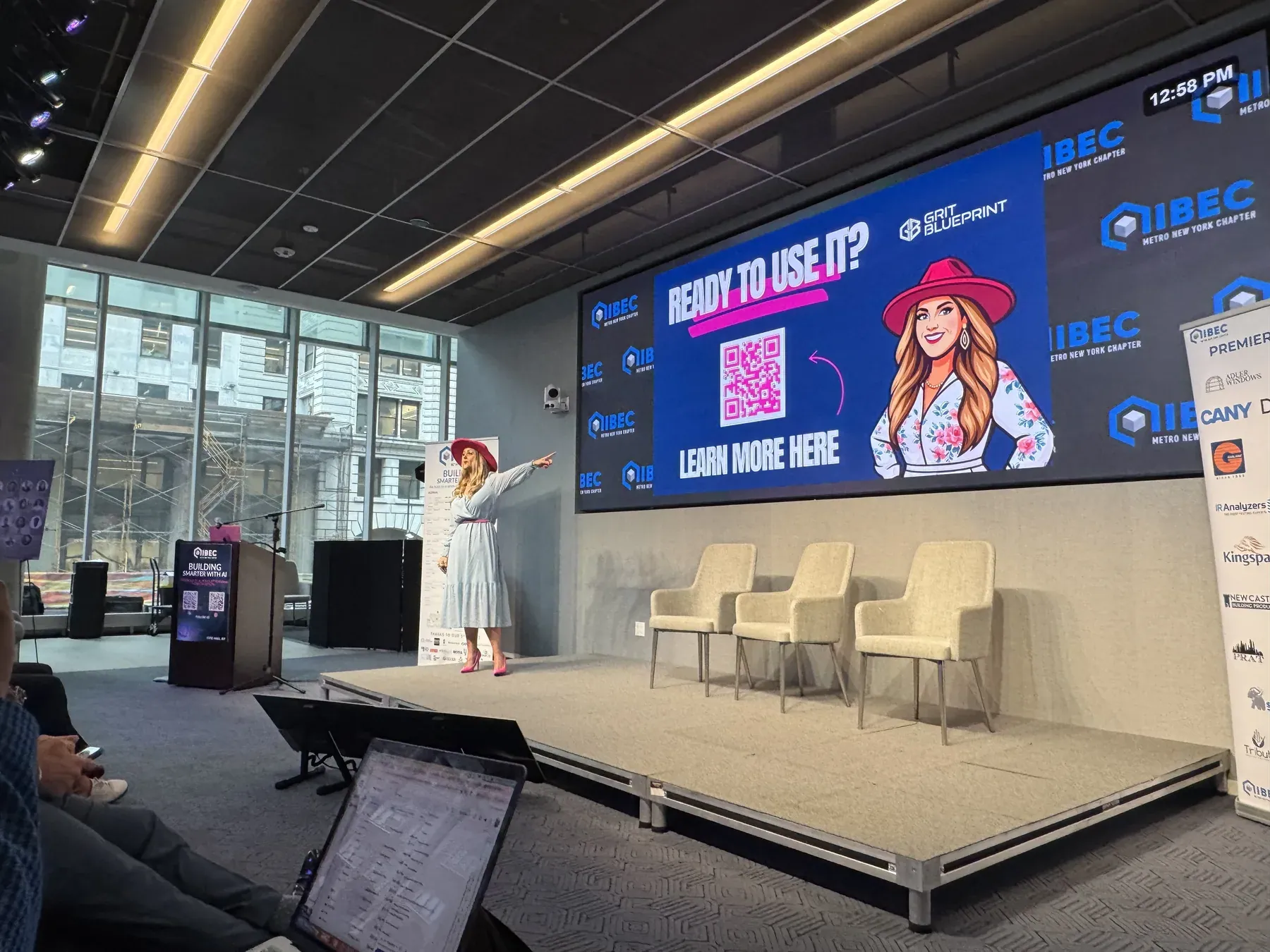
Watch on YouTube→ (opens in a new tab)IIBEC New YorkBuilding Smarter With AI. Stefanie teaching at IIBEC New York. The screen asks the room one question, Ready to use it?
AI Training for Teams Like Yours
Three building industry groups. Here is what we taught each one.
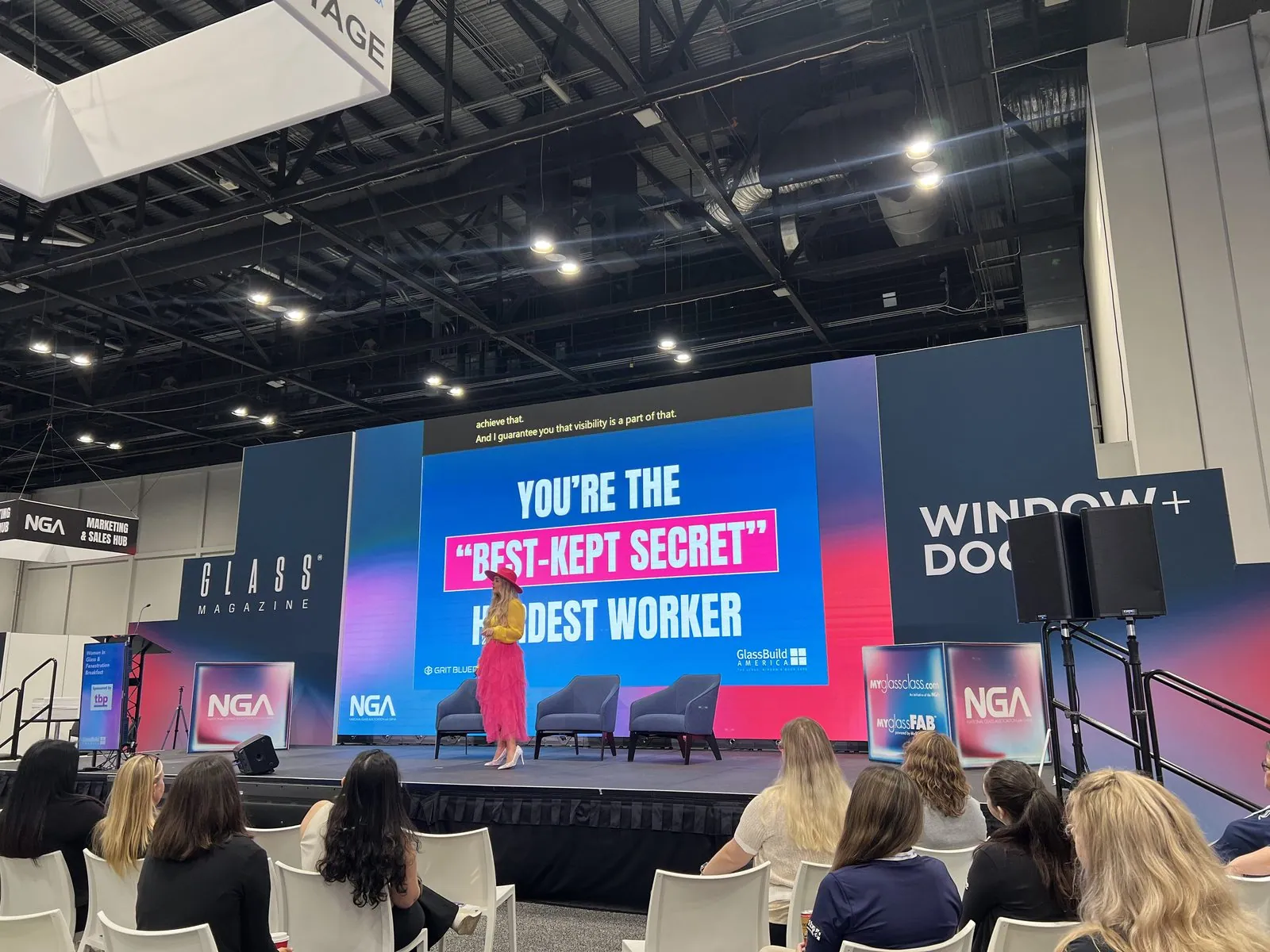
Back on stage. She has keynoted for NGA three years running.
National Glass Association
Association for the glass and glazing industry
“Her materials and presentation style stand out. It’s no surprise our collaborations are growing as she’s been so well-received by our audiences.”
Sara Neiswanger, CAE, Director of Membership
Glass companies needed AI tied to real work, like communication and training. In 2024 Stefanie led an AI workshop for glazing executives. In 2025 she gave the Main Stage keynote at GlassBuild America.
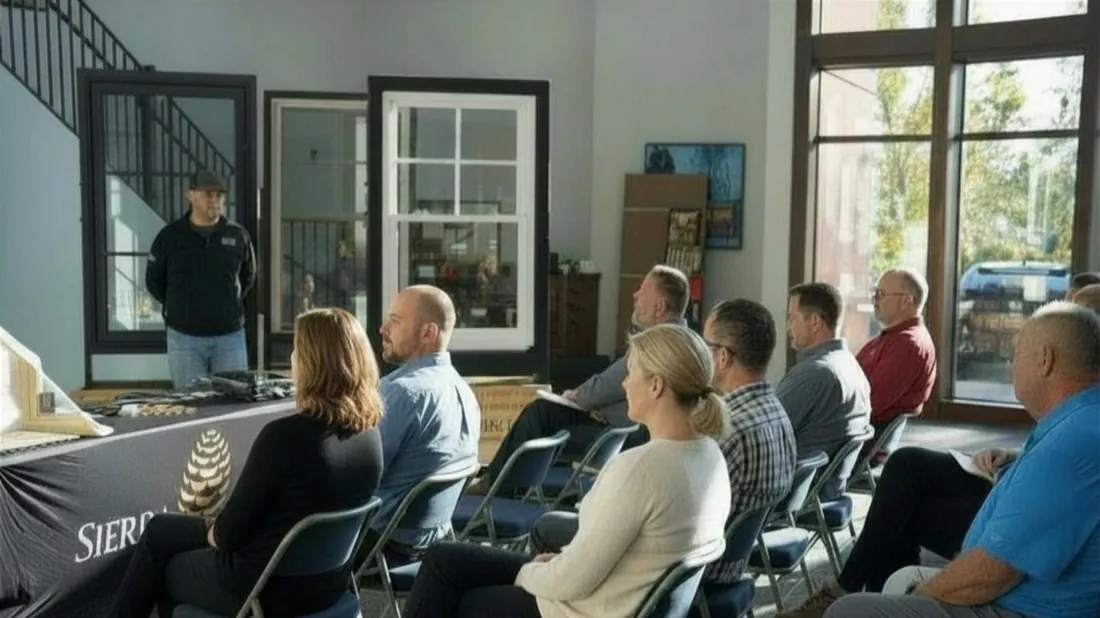
Utah. Select Remodeler contractors at a training in the Sierra Pacific Windows showroom.
Sierra Pacific Windows
Select Remodeler Program, for remodeling contractors
“Grit Blueprint helped me see how AI, YouTube, social media, and other tools can be used in our day‑to‑day business. It was really mind‑blowing.”
Dan Foster, VP of Sales, Formula Windows and Doors
The Select Remodeler Program helps contractors sell a premium window and door line. We trained those contractors in person in Utah and Colorado, on selling and on new tools like AI.
Industry Insiders. John Wheeler of Paradigm on teaching AI one challenge at a time.
Paradigm
Software for the building products industry, Middleton, Wisconsin
“Stefanie is one of the most insightful and forward thinking professionals I have come across in the window and door industry.”
Taylor Parks, Account Executive, Paradigm
Paradigm’s leaders had a lot to share on LinkedIn and a blank page to start from. We trained the team live and gave them prompts, templates, and a custom GPT for their posts.
So I had heard about AI, didn’t know much about it.
It was pretty new. I thought it was just a search engine.
Heard your presentation, went over some things.
You did some descriptions and you did some talk to text.
I think the one you did last year was a letter to my boss to get a raise.
So that kind of struck me, because I was like, “Hey, that sounds like a good plan.”
I went home and I purchased ChatGPT personally, put it on my computer, put it on my phone, and then just started something basic.
I started with just writing emails.
I need to write an email about this and summarize it to the boss, and we got that taken care of.
And then from there, it just kind of blossomed and then I started adding more.
So in the door shop I utilize it for machine maintenance, machine replacement, one, three, five, ten‑year plans, utilize it for scheduling.
“How many doors can I do?” What’s it going to take to improve this efficiency? Is there a better layout? Is there a better flow?
I throw everything into my chat and just let it tell me everything it needs to do.
“I went home and I purchased ChatGPT personally, put it on my computer, put it on my phone, and then just started something basic.”
“So in the door shop I utilize it for machine maintenance, machine replacement, one, three, five, ten‑year plans, utilize it for scheduling.”
Jon Silcox Operations Manager, Henry Poor Lumber
Jon attended one of Stefanie’s AI workshops at a Do it Best event.
“When she spoke at NAWLA on AI, it literally clicked for me. This industry really struggles with change and technology, and she helps people understand AI and how to use it to their benefit.”
Amy Monson, VP of Sales and Marketing, J.M. Thomas Forest Products
A free call with Stefanie Couch. About 30 minutes.
What Might Stop You?
These are the worries we hear most.
“What will it cost?”
The first call is free and takes about 30 minutes. We agree on the scope and the price before any work starts.
“Our people won’t use it.”
People try AI on a job they already do, like a customer follow up or meeting notes. They leave with a task they can keep using, and the manager has something clear to follow up on.
“AI gets things wrong.”
Checking is part of the training. Your team learns to check what AI gives back and to decide what still needs a person. You also bring someone who can check product details.
“We’re not tech people.”
You don’t need to be. We teach in plain words, with work your team knows.
“We don’t want private information in AI.”
Your team brings the examples, and only ones people are allowed to use. If a project uses company information, it spells out who can use it and who keeps it current.
“A canned AI class won’t fit us.”
Yours is built around one job your team already does. You pick the job, and we choose the materials for that session.
Common Questions.
What does AI training cover?
One job your team already does, such as sales preparation, follow up, writing, or planning. People practice giving AI direction and checking its answer before they use it.
Do we need a custom AI tool?
Not always. Training may be the right place to start. If you need a tool built, we look at the task first to see if a build makes sense. Explore Custom AI Projects.
Grit Rep is an AI tool we are building. It is still in development. We use it first for our own work inside Grit Blueprint, on content, websites, and client projects. What we learn there will help shape what we offer clients later.
Who can use our company information?
Public product facts, internal procedures, and private client knowledge may each need different access. Any project has to say who can use the information, who keeps it current, and where a person checks the work.
A free call with Stefanie Couch. About 30 minutes.
“I am not easily impressed. However, almost immediately I started taking value away from Stefanie’s event. I walked away with tangible ways to enhance my use of AI.”