
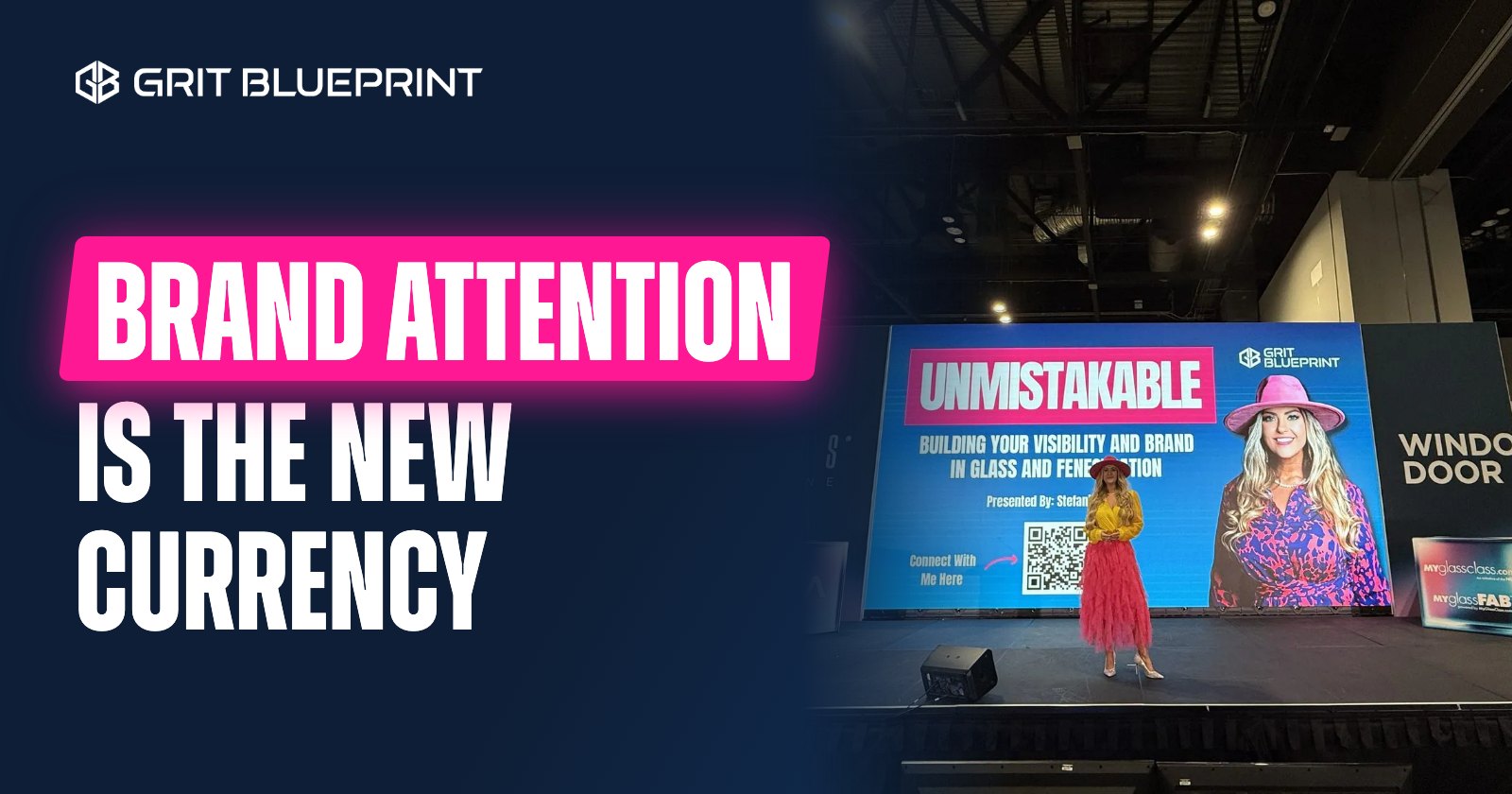
Brand attention is the new currency in business, even in building and construction. Prospects, partners, and candidates are forming an opinion about you right now, and you’re not in the room. If your leaders don’t show up where those people are looking, the call goes to someone who does.
A prospect is researching vendors. A potential partner is checking you out. A candidate is deciding whether to apply. A contractor is trying to figure out if you’re worth a meeting.
They’re all looking. They’re all deciding. And most of what they find has nothing to do with you, because you’re not there.
Brand Attention Is the New Currency
I know what you’re thinking.
“This is the building industry. We don’t need to be on social media. We build relationships in person. We earn trust through our work.”
Or maybe it’s this. “The company handles branding and marketing. That’s what we have a marketing department for. I don’t need to do it personally.”
I hear these all the time. But something has changed. Attention is now the most valuable currency in business, and that includes building and construction.
Your prospects are overwhelmed with options. Everyone claims to be the best. Everyone has quality products and great service.
So how do they decide? They go with whoever captures their attention first and whoever keeps showing up where they’re already looking.
- The person who shows up in their feed.
- The leader they’ve seen speak on a topic.
- The executive whose name they recognize before the meeting.
Consistency matters. The person who holds their attention over time has the advantage. Some call this social media fluff, but it is how decisions get made now.
Your Company Page Is Invisible
Most companies think their marketing department is handling visibility. They post from the company page and assume someone is seeing it. Almost no one is.
The Algorithm InSights 2025 Report looked at 1.8 million LinkedIn posts. It found that company page posts now reach only 1.6% of followers.¹ That’s down 15% from late 2023.
Let that sink in. If your company has 10,000 followers, fewer than 160 people see your average post.
It gets worse. Brand posts now make up just 1 to 2% of the LinkedIn feed, down from 7% in 2021.² Users have reported a 66% drop in organic reach on company pages. Posts that once got 10,000 views now get fewer than 3,000.³
Your company page is all but invisible.
Most executives miss the other half of this. The algorithm is part of the problem. Human nature is the rest of it.
Ask yourself honestly. When was the last time you followed a company page and found the content riveting (not your own company page, of course)? When did a company page post last stop your scroll? When did you last feel connected to a logo or a company because of a post on LinkedIn?
You don’t. Neither do your prospects. People follow humans.
Why It Has to Be You
Personal profiles tell a completely different story.
The same Algorithm InSights 2025 Report found that personal profiles get 2.75x more impressions and 5x more engagement than company pages, even with 46% fewer followers.⁴
CEO content gets 4x more engagement than other LinkedIn content. CEOs who post more often see a 39% increase in followers.⁵
That gap is big, and it is built into how LinkedIn works. Its algorithm now gives company pages just 5% of user feed allocation. Personal profiles get 65%.⁶
The math is clear. If you want visibility, it has to come from you as a person. Your marketing department and your company page can’t do it for you.
This Isn’t About Ego
I know the objection. “I don’t want to build a personal brand. I don’t have an ego.”
Showing up is about leadership.
Do you want influence? Do you want to decide how your company is seen in the market? Do you want to be known for what you’re actually good at?
If the answer is yes, you have a choice. You can show the world what you want to be known for. Or you can stay quiet and let them fill in the blanks.
Staying quiet can feel humble. To the market, silence is abdication. Building your personal brand is part of leading.
Beyond LinkedIn
LinkedIn is the easiest example because the data is clear. The same thing happens everywhere people meet you.
- Podcasts. The hosts and guests build relationships with listeners over hours, not seconds. That trust compounds.
- Speaking at live events. The person on stage builds trust with 500 people in 45 minutes. They become the name people remember.
- Webinars. The face on screen becomes the expert. The voice becomes familiar.
- Industry publications. The byline gets read. The author becomes the authority.
- YouTube, Instagram, trade shows, and conferences all follow the same pattern.
People connect with people. They trust people. They remember people. The channel matters less than the principle.
If you want attention, a human has to earn it. And they have to earn it again and again.
What Silence Actually Costs You
Some leaders think staying quiet is the safe play. It isn’t.
When prospects research you and find nothing, they don’t think, “This person must be humble.” They think one of these:
- “Are they still relevant?”
- “Are they hiding something?”
- “Do they even care about this business?”
Silence creates uncertainty. Uncertainty creates doubt. Doubt kills deals.
How many deals have you lost without knowing it? Your price was fine and your product was fine. The prospect just couldn’t find anything about you or your leadership team online. So they went with someone they could find.
That’s the cost. The deals you lose this way go to the companies buyers can see, even when yours is just as good.
When executives hide, the whole company pays.
- Sales cycles get longer. Your team starts every call cold and has to build trust from scratch. There’s no warmth and no head start.
- Price pressure goes up. When prospects can’t tell you apart, they default to price. Visibility creates preference. Preference protects margin.
- Talent goes elsewhere. 75% of job seekers research a company’s reputation before applying.⁷ 79% of professionals say they prefer to work for a company whose leadership is active on social media.⁸ If your leadership is invisible, you lose A players before the interview.
Two Companies. Same Product. Only One Gets the Call.
Picture two manufacturers in the same category. Same quality. Same price. Same service area.
Company A hides its leadership. Its website has an About page with stock photos and a paragraph written in 2018. Its executives have LinkedIn profiles with no posts and 200 connections. Its company page shares product specs once a month.
Company B’s CEO posts every week. They share lessons from the plant floor and talk about what’s working and what’s not. They show up at industry events and speak on panels. Their sales team shares that content with prospects before calls.
Both companies have great products. But when a prospect is deciding who to call, who do they feel like they know?
Company B. Every time. Luck has nothing to do with it. That’s visibility, attention, and leadership showing up.
Your Reputation Is an Asset or a Liability
Every day, you’re either building equity or losing ground. Every day you stay invisible, someone else captures the attention that could have been yours.
Every day you wait for the right time, other leaders are showing up, building trust, and becoming the name people recognize.
Attention compounds. Consistency compounds. The leaders who start now will be impossible to catch in two years. The ones who wait will wonder why growth feels so hard.
Your reputation is forming right now, whether you take part or not. The only question is whether it’s working for you or against you. If you want a team to help you show up, see how we handle executive branding for building industry leaders.
Your Move
Someone is Googling your name right now. Someone is checking your LinkedIn before a meeting. Someone is deciding if you’re worth their time.
What will they find?
If the answer is not much, you have a leadership problem more than a marketing one. Your marketing department can’t fix this. Your company page can’t fix this. Only you can.
Show up. Share what you know. Let people see the leader behind the logo. Shape your reputation, or let someone else do it for you.
You can read more about branding and why it matters.
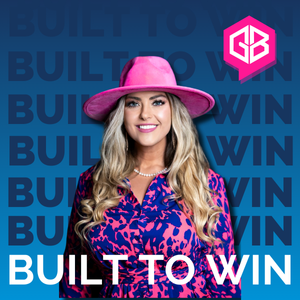
Join Built to Win
If you’re a leader in the building industry who wants to come out of this market stronger, Built to Win will show you how. I write it for owners, CEOs, and decision makers who refuse to wait for permission to win.
P.S. Someone is forming an opinion about you right now. The only question is if you’re the one shaping it.
Stefanie Couch, Founder, Grit Blueprint
Sources
- Algorithm InSights 2025 Report by Richard van der Blom, analyzing 1.8 million LinkedIn posts. Company page posts reach only 1.6% of followers, a 15% drop from late 2023. Cited in Entrepreneur, “Organic Reach On LinkedIn Is Cratering,” October 2025.
- Algorithm InSights 2025 Report. Brand posts account for 1 to 2% of LinkedIn feeds, down from 7% in 2021. Cited in TryOrdinal, “The Declining Reach of LinkedIn Company Pages,” 2025.
- AuthoredUp data, cited in Entrepreneur, October 2025. Users reported organic reach decline of 66% on company pages.
- Refine Labs study, cited in Algorithm InSights 2025 Report and TryOrdinal. Personal profiles generate 2.75x more impressions and 5x more engagement than company pages, despite 46% fewer followers.
- LinkedIn data, cited in Entrepreneur, October 2025. CEO content receives 4x more engagement; CEOs see 39% follower increase after boosting posting frequency.
- GrowLeads, “LinkedIn Algorithm 2026,” December 2025. Company pages receive 5% of user feed allocation; personal profiles dominate 65%. (opens in a new tab)
- Indeed survey, cited in 100 Recruitment Statistics, February 2025. 75% of job seekers research a company’s employer reputation before applying.
- BRANDfog CEO, Social Media and Leadership Survey. 78 to 79% of respondents prefer to work for a company whose leadership is active on social media.
Questions and Answers
Brand attention is how much notice prospects, partners, and candidates give you while they decide. They go with whoever captures their attention first and keeps showing up where they already look: the person in their feed, the leader they saw speak, the executive whose name they know before the meeting.
Reports cited in the article show company page posts reach only a small share of followers, and that share keeps falling. Human nature is the other half. People rarely feel connected to a logo because of a post. They follow humans, so the posts that get seen come from leaders.
Yes. Studies cited in the article found personal profiles get far more impressions and engagement than company pages, even with fewer followers. GrowLeads reports LinkedIn gives company pages just 5% of user feed allocation, while personal profiles get 65%. Visibility has to come from leaders as people.
No. It is about influence and leadership. If you want to decide how your company is seen and be known for what you are good at, you can show the world what you stand for, or stay quiet and let people fill in the blanks themselves.
Prospects who find nothing start to doubt you, and doubt kills deals. Sales cycles get longer because your team starts every call cold. Price pressure rises because buyers cannot tell you apart. Talent goes elsewhere too, because job seekers research a company’s reputation before they apply.
Want Help Putting It to Work?
A free call with Stefanie Couch. About 30 minutes.
Not ready to talk? Get the Built to Win Newsletter

Written by Stefanie Couch
Founder of Grit Blueprint and the front-facing voice of the brand. Stefanie helps companies across the building industry turn hard-earned trust into visible proof, useful content, and AI-search-ready authority. Known on stage, on the mic, and for her signature pink hat.